

Introduction
Living in a small home does not mean you have to compromise on style, comfort, or functionality. In fact, with the right design strategies, even compact spaces can feel open, stylish, and welcoming. Interior designers around the world use clever furniture placement, smart storage solutions, and visual design tricks to transform small spaces into comfortable living environments.
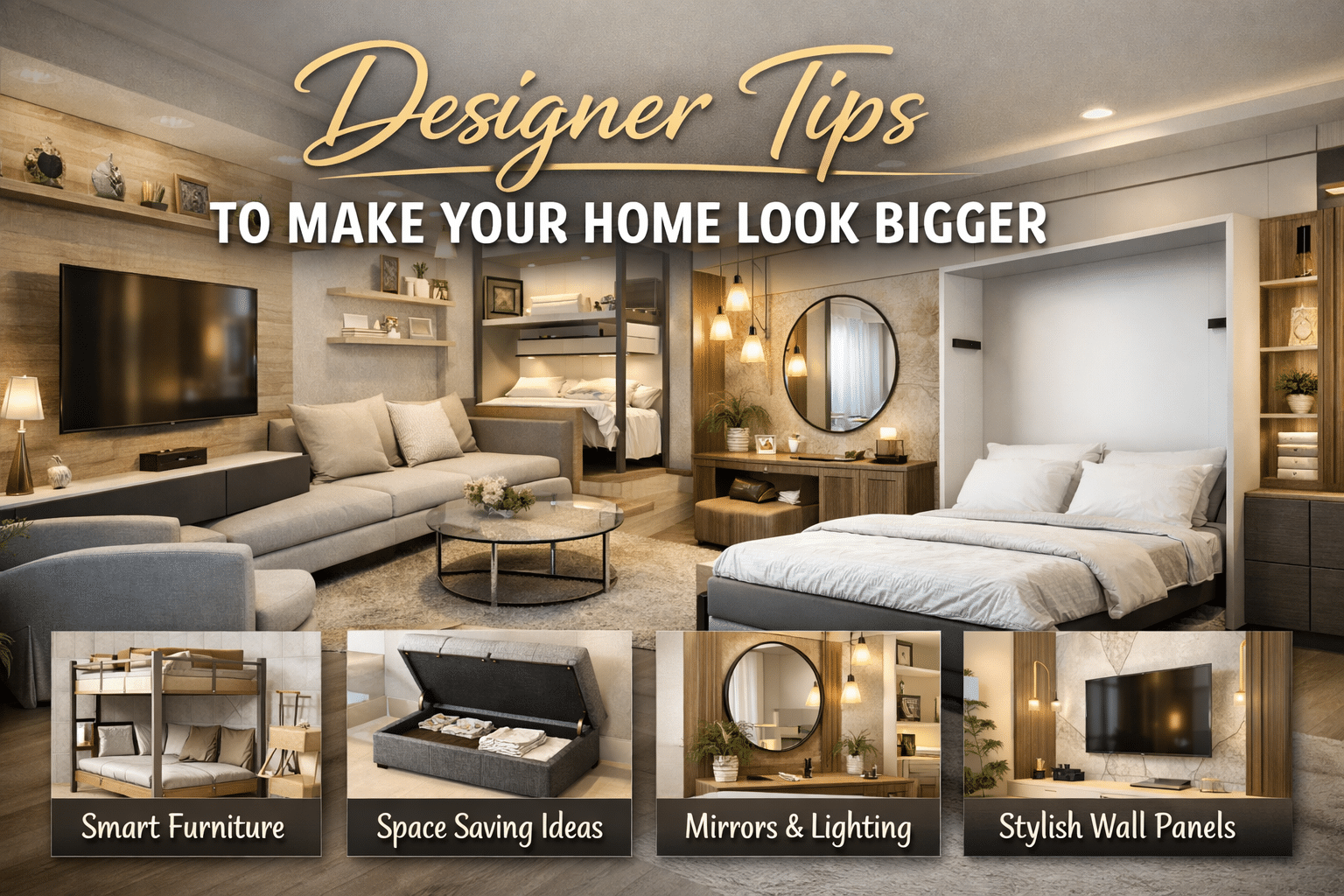
This is where Designer Tips for Small Homes become incredibly useful. These professional strategies help homeowners maximize available space while maintaining an elegant and modern look. From choosing the right furniture to using lighting and wall designs effectively, small adjustments can make a huge difference.
In this guide, we will explore practical Designer Tips for Small Homes that can instantly make your house feel bigger, brighter, and more organized. Whether you live in an apartment, a compact house, or a studio, these ideas will help you create a spacious and stylish interior.
Choose Smart and Space-Saving Furniture
One of the most important Designer Tips for Small Homes is choosing furniture that saves space without compromising functionality. Oversized furniture can make a room feel cramped and cluttered.
Instead, choose compact furniture that serves multiple purposes.
Best Furniture Choices for Small Homes
-
Modern Beds with built-in storage
-
Murphy Beds that fold into the wall
-
Bunk Beds for kids’ rooms
-
Sofa Cum Beds for living rooms
-
Slim Metal dining tables that occupy less space
These furniture pieces allow you to maximize your available space while maintaining comfort.
Another essential Designer Tips for Small Homes strategy is selecting furniture with clean lines and minimal designs. Bulky designs visually reduce room space, while sleek furniture makes the room appear open and modern.
Use Multi-Functional Furniture
Multi-purpose furniture is a game changer for small spaces. One of the most effective Designer Tips for Small Homes is investing in furniture that performs more than one function.
For example:
-
A Sofa Cum Bed can work as both seating and sleeping space.
-
Storage beds provide hidden compartments.
-
Folding dining tables can be expanded when needed.
These solutions help reduce clutter while keeping your home functional.
Interior designers often recommend this approach because it supports the idea of Designer Tips for Small Homes that prioritize efficiency without sacrificing style.
Use Vertical Space Wisely
Many homeowners forget about vertical space when decorating their homes. However, utilizing walls and vertical storage is one of the smartest Designer Tips for Small Homes.
Instead of adding large cabinets on the floor, use vertical storage solutions.
Smart Vertical Space Ideas
-
Install LCD Wall Units
-
Use floating shelves
-
Add tall wardrobes
-
Install wall-mounted cabinets
A well-designed LCD Wall Unit not only saves floor space but also adds a modern aesthetic to the living room.
When applied properly, this technique becomes one of the most practical Designer Tips for Small Homes that designers frequently recommend.
Create a Stylish Feature Wall
A feature wall can visually expand a room while adding personality to your home. This design technique is widely used in modern interiors.
One of the most stylish Designer Tips for Small Homes is installing Featured Wall UNIT behind a TV unit or bed.
Feature walls help draw attention to a specific area of the room, making the overall space feel more balanced and structured.
Popular options include:
-
Decorative Featured Wall Panels
-
Marble texture wall panels
-
Wooden slat panels
-
Textured wallpaper
These designs add depth to your interior, which is a powerful trick used in many Designer Tips for Small Homes.
Use Light Colors and Reflective Surfaces
Color plays a huge role in how spacious a room feels. One of the easiest Designer Tips for Small Homes is choosing light color palettes.
Best Colors for Small Spaces
-
White
-
Beige
-
Soft grey
-
Light pastel shades
Light colors reflect natural light, making rooms feel larger and more open.
Another effective trick in Designer Tips for Small Homes is using reflective surfaces such as mirrors, glossy panels, and glass furniture. These elements bounce light around the room and create the illusion of more space.
Optimize Lighting for a Spacious Feel
Lighting is another important factor that can transform a small room. Dark rooms feel smaller, while well-lit spaces appear larger.
Professional designers often include layered lighting in their Designer Tips for Small Homes.
Types of Lighting to Use
-
Ceiling lights
-
Wall lamps
-
LED strip lighting
-
Hidden lighting behind panels
Combining different lighting sources helps eliminate shadows and enhances the perception of space.
Proper lighting is one of the simplest Designer Tips for Small Homes, yet it can dramatically change how a room feels.
Declutter and Organize Your Space
A cluttered room automatically feels smaller. One of the golden Designer Tips for Small Homes is maintaining an organized environment.
Simple Decluttering Tips
-
Avoid unnecessary furniture
-
Use storage compartments
-
Keep surfaces clean
-
Organize shelves and cabinets
Minimalism works perfectly for small homes. The fewer items you keep on display, the more spacious the room will appear.
This principle is central to many Designer Tips for Small Homes, as designers believe that organization plays a huge role in spatial perception.
Choose Open and Lightweight Furniture
Heavy furniture designs can make a room feel crowded. One of the subtle Designer Tips for Small Homes is selecting furniture with open frames or slim structures.
For example:
-
Slim Metal dining tables
-
Glass center tables
-
Chairs with open backs
-
Floating shelves
These designs allow light and visibility to pass through the furniture, making the space feel less congested.
Designers frequently highlight this as one of the most practical Designer Tips for Small Homes for modern interiors.
Arrange Furniture Strategically
Furniture placement can significantly affect how spacious a room appears. Instead of pushing everything against the wall, try strategic placement.
Interior designers suggest:
-
Creating small conversation areas
-
Leaving walking space between furniture
-
Avoiding overcrowding
Thoughtful layout planning is another powerful element in Designer Tips for Small Homes that improves both comfort and visual balance.
Conclusion
Small homes can be just as stylish and comfortable as large ones when designed thoughtfully. By following smart interior strategies, you can transform compact spaces into functional and beautiful living environments.
From choosing Modern Beds, Murphy Beds, and Bunk Beds to installing LCD Wall Units, Featured Wall UNIT, and sleek Metal dining tables, the right furniture choices can make a significant difference.
These Designer Tips for Small Homes focus on smart furniture selection, vertical storage, lighting, and clutter control. By implementing these ideas, you can maximize every inch of your home and create a space that feels open, elegant, and inviting.
If you are planning to upgrade your home interior, start applying these Designer Tips for Small Homes today. Explore modern furniture solutions and creative design ideas to make your living space more comfortable and visually spacious.
Explore More Furniture And Interior Design Articles:
- CHOOSE YOUR SOFA COLOR WISELY
- BUILDING UP YOUR HOME OFFICE!
- Steps to Help Prevent Your Wood Furniture Dust Free Longer
- Why Do People Prefer to Buy Furniture Online
- 7 Common Interior Designing Mistakes that Spoil the Look!