


Bar stools are a practical and stylish seating option for modern kitchens, breakfast counters, home bars, and open-plan living spaces. Their elevated design allows people to sit comfortably at raised surfaces while keeping the surrounding area visually open and organised.
In Pakistani homes, where kitchens and living areas often serve multiple purposes, the right bar stools can create an informal dining spot, a convenient breakfast corner, or an inviting place for family conversations. Choosing the right height, materials, design, and placement is essential for creating a seating arrangement that looks attractive and works comfortably in everyday life.
This guide explores how to use bar stools in different areas of your home, which styles complement modern interiors, and what to consider when planning a functional seating arrangement.
Why Bar Stools Are Popular in Modern Homes
Bar stools provide a different seating experience from traditional dining chairs. Their taller structure makes them suitable for raised counters, while their relatively compact footprint can help maintain a clean and uncluttered appearance.
They are particularly useful in kitchens that include a breakfast counter or island. Instead of dedicating a separate area to casual meals, homeowners can create seating along an existing counter.
Some of the main advantages include:
- Efficient use of space: Bar stools can fit beneath suitable counters when not in use.
- Flexible seating: They can accommodate quick meals, coffee breaks, and informal conversations.
- Contemporary appearance: Their elevated silhouettes complement many modern kitchen and interior designs.
- Design variety: Wooden, metal, upholstered, and mixed-material options suit different decorative styles.
- Visual openness: Backless and slim-frame stools can make compact areas feel less crowded.
Homeowners exploring different furniture arrangements can browse bar stool designs to understand how different shapes, frames, and finishes can complement their interiors.
Best Places to Use Bar Stools in Your Home
Although bar stools are commonly associated with kitchens, their usefulness extends to several other areas. The most suitable placement depends on the counter height, available floor space, and how frequently the seating will be used.
Kitchen Islands and Breakfast Counters
A kitchen island is one of the most natural locations for bar stools. When the island includes a suitable overhang and adequate legroom, stools can turn it into a comfortable space for breakfast, snacks, or casual family gatherings.
For smaller kitchens, a breakfast counter positioned along a wall may offer a practical alternative to a separate dining table. Two carefully sized stools can provide convenient seating without taking up too much floor space.
Choose finishes that complement the kitchen cabinets, countertops, and surrounding materials. For example, black metal frames can contrast attractively with light-coloured cabinetry, while wooden stools can introduce warmth into neutral interiors.
If you are planning a complete kitchen update, explore modern kitchen design ideas to coordinate your counter seating with the overall layout.
Open-Plan Living and Dining Areas
In open-plan homes, bar stools can help establish a natural transition between the kitchen and living room. A breakfast counter with seating can define the kitchen boundary without requiring a solid partition.
This arrangement is particularly useful when family members want to interact while meals are being prepared. It can also provide extra informal seating when entertaining guests.
To maintain a coordinated appearance, repeat one or two design elements from the living area, such as a wood tone, upholstery colour, or metal finish.
Home Coffee Corners
A compact coffee station can become a comfortable sitting area with a narrow counter and one or two stools. This arrangement works well in an unused kitchen corner or another suitable indoor space.
Choose stools that are easy to move and do not obstruct cabinet doors or walking routes. Upholstered seats may provide additional comfort, while wipe-clean surfaces can simplify everyday maintenance.
Home Entertainment Areas
Bar stools can also complement a dedicated entertainment counter or refreshment station. A row of coordinated stools creates a casual seating area where guests can sit and talk without requiring bulky lounge furniture.
For longer conversations, stools with supportive backrests and footrests are generally more comfortable than minimalist backless designs.
Choosing Bar Stool Styles for Different Interior Themes
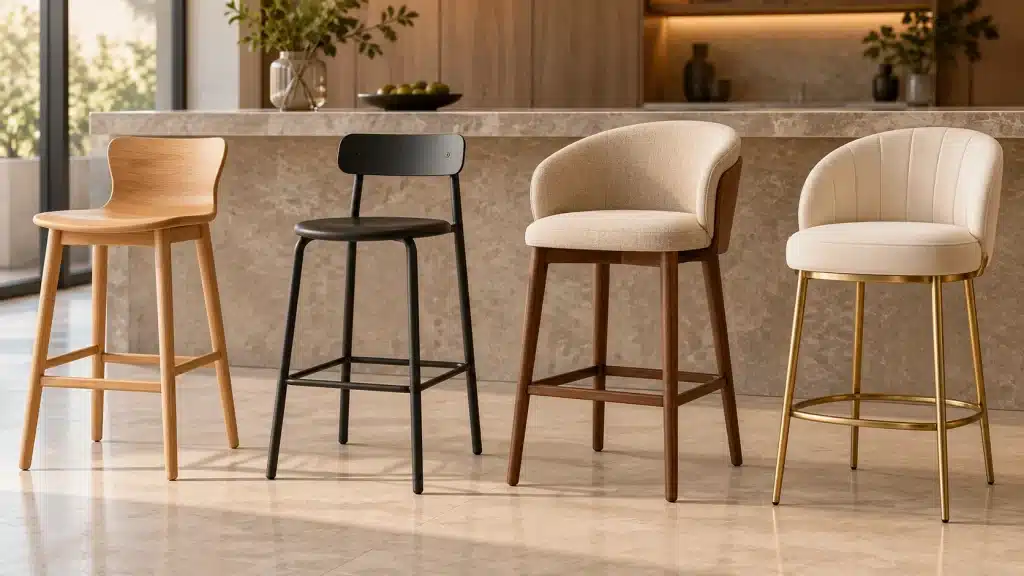 The appearance of a bar stool should complement the room rather than compete with its main furniture. Materials, frame shape, seat profile, and colour all influence the final result.
Modern Minimalist Bar Stools
Minimalist stools feature clean lines, restrained colours, and simple silhouettes. Slim metal legs, understated upholstery, and smooth wooden seats are common characteristics.
These designs are especially suitable for contemporary kitchens with flat-panel cabinets, neutral colour palettes, and uncluttered countertops.
Wooden Bar Stools for Warm Interiors
Wooden stools can add natural character to kitchens and living spaces. Light wood tones suit Scandinavian-inspired interiors, while darker finishes can complement traditional or contemporary furniture.
When selecting wooden stools, examine the frame construction, joints, finish quality, and footrest arrangement. These details matter for stability and long-term use.
Metal Bar Stools for Industrial Interiors
Metal-framed stools are a natural fit for industrial and urban-inspired interiors. Black, grey, and other understated finishes pair well with stone-look counters, textured walls, and wooden surfaces.
A metal frame combined with an upholstered or wooden seat can soften the appearance while maintaining a contemporary look.
Upholstered Bar Stools for Comfortable Seating
Upholstered stools can make breakfast counters and informal dining spaces more inviting. Fabric or leather-look upholstery adds texture and offers a softer sitting surface than an unpadded seat.
For everyday kitchen use, consider how easily the upholstery can be cleaned. Removable cushions or suitable wipe-clean materials may be more practical in areas exposed to food spills.
Luxury-Inspired Bar Stools
Luxury-inspired stools often feature curved backrests, refined upholstery, decorative stitching, and carefully coordinated finishes.
These styles work particularly well with marble-look countertops, elegant lighting, and contemporary kitchen cabinetry. However, comfort and correct proportions should remain priorities over decorative details.
How to Choose the Right Bar Stool Height
Correct stool height is one of the most important factors in comfortable counter seating. A stool that is too tall leaves insufficient space for the legs, while one that is too low can make the counter awkward to use.
As a general starting point, allow approximately 25–30 cm (10–12 inches) between the top of the stool seat and the underside of the counter. Always measure the actual available clearance, particularly when the counter has a thick top or a supporting apron.
| Counter Type | Typical Counter Height | Suggested Seat Height |
|---|---|---|
| Standard Kitchen Counter | 86–91 cm (34–36 inches) | 61–66 cm (24–26 inches) |
| Raised Bar Counter | 102–107 cm (40–42 inches) | 71–76 cm (28–30 inches) |
| Extra-Tall Counter | 112–117 cm (44–46 inches) | 81–86 cm (32–34 inches) |
These are approximate furniture-sizing guidelines, not fixed standards for every product. Check the manufacturer’s actual seat height and measure your counter before purchasing or ordering customised stools.
How Much Space Should You Leave Between Bar Stools?
Comfortable spacing is just as important as seat height. As a practical starting point, allow approximately 60 cm (24 inches) of counter width per person for compact stools, with additional space for wider seats or stools with armrests.
Measure the full width of each stool, including its legs and armrests, rather than relying only on the seat dimensions.
Also ensure there is enough space behind the stools for people to sit down, stand up, and move around safely. Busy walkways generally need more clearance than occasional-use seating areas.
Bar Stools With Backrests vs Backless Bar Stools
Both designs have advantages, but they suit different seating habits and room layouts.
| Feature | Stools With Backrests | Backless Stools |
|---|---|---|
| Comfort | More back support for longer sitting periods | Better suited to shorter sitting periods |
| Appearance | More prominent furniture profile | Minimal and visually open |
| Storage | May not tuck fully beneath the counter | Often easier to tuck beneath a counter |
| Best Use | Breakfast areas and casual dining | Compact counters and quick seating |
If your family frequently uses the counter for meals or extended conversations, a supportive backrest and footrest may be worthwhile. For occasional use in a compact kitchen, a backless design may offer greater flexibility.
How to Match Bar Stools With Kitchen Cabinets and Countertops
Coordinating bar stools with the surrounding interior helps create a cohesive appearance. Exact colour matching is not always necessary; complementary tones and finishes can be equally effective.
White and Light-Coloured Kitchens
White cabinets and light countertops provide a versatile background for wooden, black metal, beige, or muted-colour stools.
Wooden seats can introduce warmth, while black frames create a defined contrast without requiring additional decorative elements.
Dark and Contemporary Kitchens
Kitchens with charcoal, walnut, or other dark finishes can benefit from stools upholstered in lighter neutral fabrics. This contrast helps distinguish the seating from the cabinetry.
Alternatively, matching dark frames with warm wooden seats can create a coordinated appearance.
Marble-Look and Stone-Finish Counters
Stone-look counters often have distinctive patterns and textures. Bar stools with relatively simple frames can balance these surfaces and prevent the room from appearing overly busy.
For additional inspiration on cabinetry, finishes, and space planning, read our guide to kitchen interior and furniture designs in Pakistan.
Using Bar Stools in Small Pakistani Homes
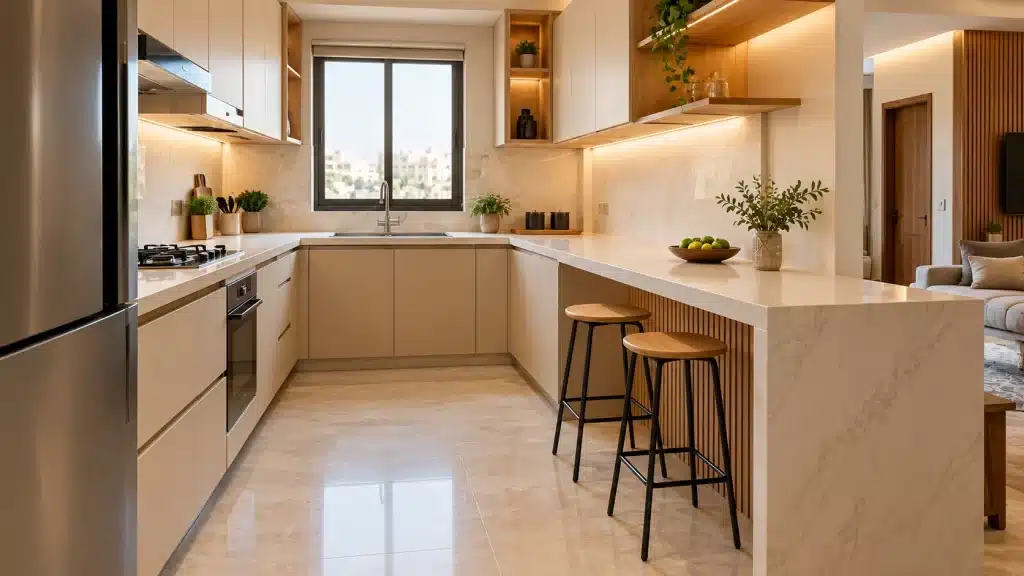 In apartments and compact homes, furniture should support everyday activities without restricting movement. Bar stools can work particularly well when a kitchen already includes a raised counter or a suitable breakfast ledge.
Consider these practical arrangements:
- Place two compact stools beneath a breakfast counter rather than introducing an additional dining table.
- Choose slim frames where floor space is limited.
- Use light-coloured finishes to maintain a visually open appearance.
- Avoid oversized backrests and armrests in narrow passageways.
- Keep enough clearance for kitchen cabinets, drawers, and appliance doors.
- Choose stools with stable frames and comfortable footrests for regular use.
For kitchens where a separate dining area is still necessary, browse dining table designs to compare traditional dining arrangements with counter-based seating.
Creating a Comfortable Breakfast Counter Seating Area
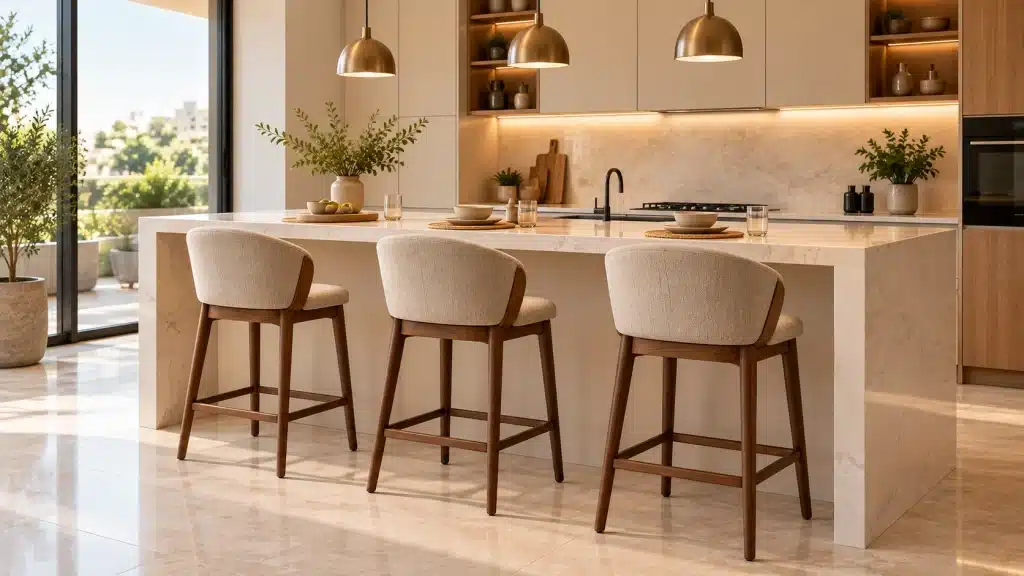 A well-designed breakfast counter should be comfortable, practical, and easy to maintain. The stools are only one part of the arrangement.
Provide Adequate Legroom
Ensure the counter has sufficient overhang for comfortable knee positioning. A stool placed against a cabinet face without appropriate legroom may be uncomfortable even when the seat height is correct.
Include Comfortable Foot Support
Because bar stools are taller than ordinary chairs, many users cannot rest their feet naturally on the floor. A properly positioned footrest helps provide support and can improve sitting comfort.
Consider Lighting Above the Counter
Pendant lights can visually define a breakfast area and provide useful illumination. Choose fixtures and installation heights that do not obstruct sightlines or create glare.
Keep the Counter Uncluttered
A small decorative tray, plant, or simple accessory may be enough to give the area a finished appearance. Avoid filling the counter with items that interfere with its everyday use.
Bar Stools vs Dining Chairs: Which Is Better for Your Home?
Bar stools and dining chairs serve different purposes. Neither is universally better; the right choice depends on how the space is used.
Bar stools are ideal for raised counters, quick meals, and casual conversations. Dining chairs are generally better suited to standard-height dining tables and longer, more formal meals.
Households that regularly entertain guests or enjoy family dinners may prefer a dedicated dining arrangement. You can explore dining chair designs when planning a traditional dining space.
In larger open-plan homes, both seating types can work together. A breakfast counter can accommodate everyday snacks, while a separate dining table provides space for family meals and guests.
Maintenance Tips for Different Bar Stool Materials
Regular cleaning and basic maintenance can help keep bar stools attractive and functional.
Wooden Bar Stools
Clean wooden surfaces using a soft, slightly damp cloth and dry them promptly. Avoid prolonged exposure to moisture and harsh cleaning chemicals that may damage the finish.
Metal Bar Stools
Wipe metal frames regularly and inspect joints, screws, and footrests for looseness. Address chipped finishes or corrosion according to the manufacturer’s care instructions.
Fabric Upholstered Bar Stools
Vacuum fabric seats periodically to remove dust. Treat spills according to the upholstery manufacturer’s cleaning guidance, and test any cleaning product on a hidden area first.
Leather-Look Upholstered Bar Stools
Use a suitable soft cloth and manufacturer-approved cleaning products. Avoid abrasive materials and strong solvents that may damage the upholstery surface.
Common Mistakes to Avoid When Arranging Bar Stools
Even attractive bar stools can become inconvenient when their dimensions or placement are unsuitable.
- Choosing the wrong seat height: Always measure the counter and available legroom.
- Overcrowding the counter: Leave enough space between people for comfortable seating.
- Ignoring the footrest: Taller seating without appropriate foot support can become uncomfortable.
- Selecting difficult-to-clean materials: Consider everyday kitchen spills and maintenance requirements.
- Blocking circulation: Keep stools away from narrow walkways and frequently used cabinet doors.
- Prioritising appearance over stability: Examine the frame, joints, base, and overall construction.
For homes with young children, pay particular attention to stability, supervision, and the risk of tipping or climbing. A tall stool should not be treated as a substitute for age-appropriate child seating.
Customising Bar Stools for Your Interior
Customisation can be useful when standard furniture dimensions or finishes do not suit your kitchen. Depending on the selected design and manufacturing requirements, bar stools may be made with different seat heights, frame finishes, upholstery colours, and backrest styles.
Before requesting customised seating, measure the counter height, underside clearance, available width, and surrounding walking space.
At Obsession Outlet, customers can explore furniture designs and discuss suitable customisation options according to their interior requirements. Material choices, dimensions, finishes, and availability should be confirmed before placing an order.
Frequently Asked Questions
What is the difference between a bar stool and a counter stool?
A counter stool is generally designed for standard kitchen counters, while a bar stool has a taller seat suited to raised bar-height surfaces. Always compare the actual seat height with your counter measurements.
Are bar stools suitable for small kitchens?
Yes. Compact stools can work well in small kitchens with suitable breakfast counters. Backless or slim-frame designs are often easier to accommodate, provided adequate seating and walking clearance is available.
Which material is best for kitchen bar stools?
The best material depends on your preferred appearance, cleaning requirements, and budget. Metal frames, finished wood, and suitable easy-care upholstery can all be practical choices when properly constructed and maintained.
Are bar stools with backrests more comfortable?
Stools with supportive backrests are often more comfortable for longer sitting periods. Backless stools may be sufficient for short meals or occasional use, especially in compact spaces.
How many bar stools can fit at a kitchen island?
The number depends on the island’s usable seating width and stool dimensions. Allow approximately 60 cm of counter width per person as a starting point, with more space for wider stools or armrests.
Can bar stools be customised for kitchen counter height?
Some made-to-order designs can be customised to suit specific counter heights and interior finishes. Confirm the available options, final measurements, and construction details with the furniture manufacturer before ordering.
Conclusion
Bar stools can make kitchens, breakfast counters, and open-plan living spaces more functional without sacrificing style. The best arrangement combines correct seat height, comfortable spacing, suitable materials, and a design that complements the surrounding furniture.
Whether you prefer minimalist metal frames, warm wooden finishes, or upholstered seating, prioritise comfort, stability, and practical everyday use. Carefully selected bar stools can turn an ordinary counter into an inviting part of your home.
Explore furniture options at Obsession Outlet and consider the measurements, finishes, and seating features that best suit your space.